It’s hard to know where to start when planning a trip to Kyrgyzstan. On the map, the country seems rather compact. On the ground, it’s quite the opposite. A mosaic of mountain ranges, valleys, and plateaus that follow one another without apparent logic, to the point that it is almost impossible to make a choice when it comes to organizing a ski touring trip.
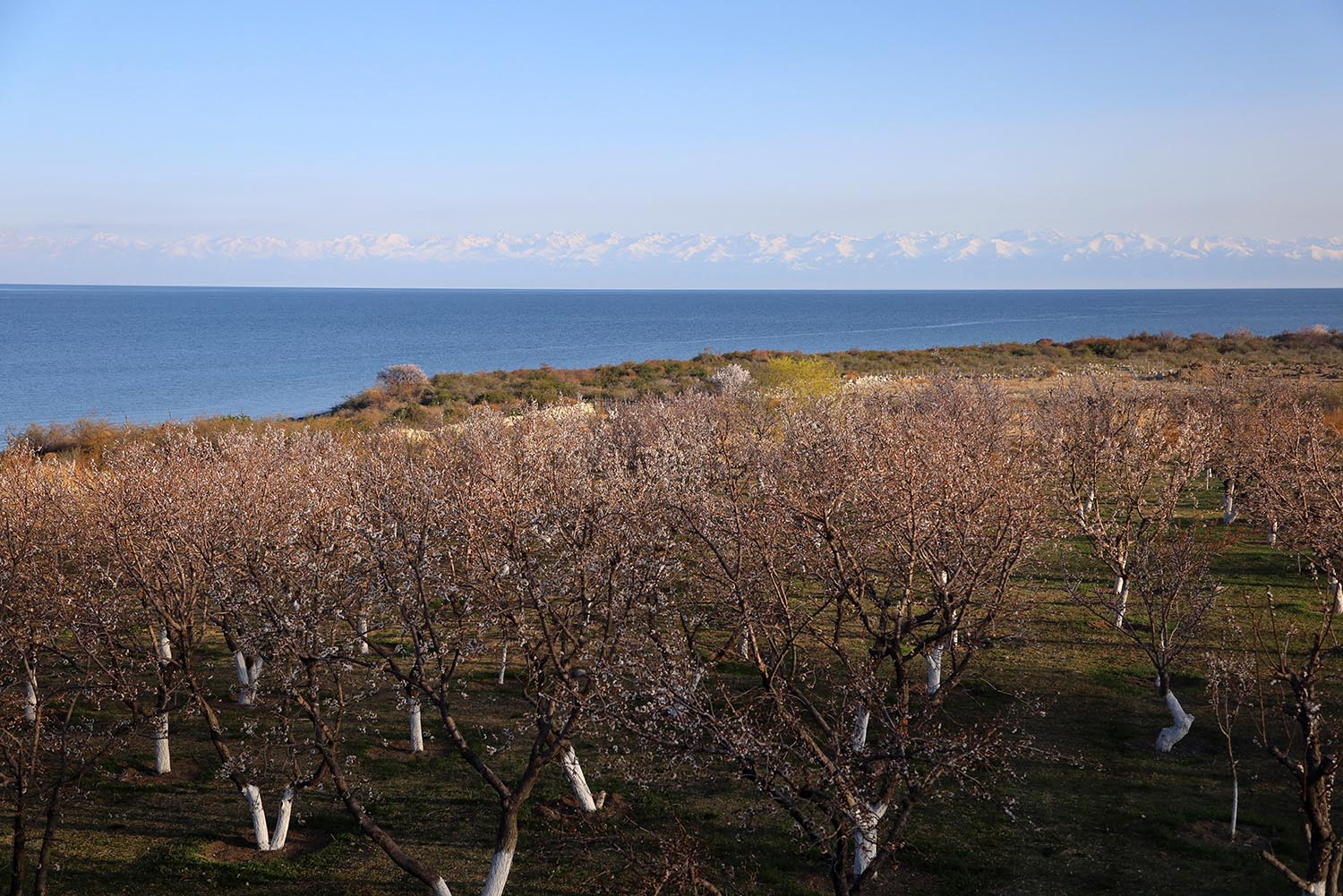
Here, the mountain is everywhere. The country is almost entirely composed of reliefs, structured by large chains that divide the territory into blocks that are not well connected to each other. Communication routes often pass through passes perched at over 2700 m, which partly explains why some areas remain isolated. In the north, around Bishkek, the altitudes are milder and life is organized in the basins. Further east, the gigantic Issyk Kul lake, a true inland sea at 1600 m altitude, provides an unexpected contrast. And as soon as you move away from it, the reliefs take over again, up to the peaks of the Tian Shan that far exceed 7000 m at the Chinese border. In the south, other chains like the Pamir-Alay close the landscape and add to this feeling of enclosed immensity.
In this already complex setting, the country is evolving rapidly. Infrastructures are developing at great speed, notably thanks to Chinese investments. New roads are opening up valleys that were once difficult to access, sometimes passable today even in winter. Projects for resorts are also emerging, a sign that Kyrgyzstan is gradually shifting from a confidential adventure terrain to a more structured destination.
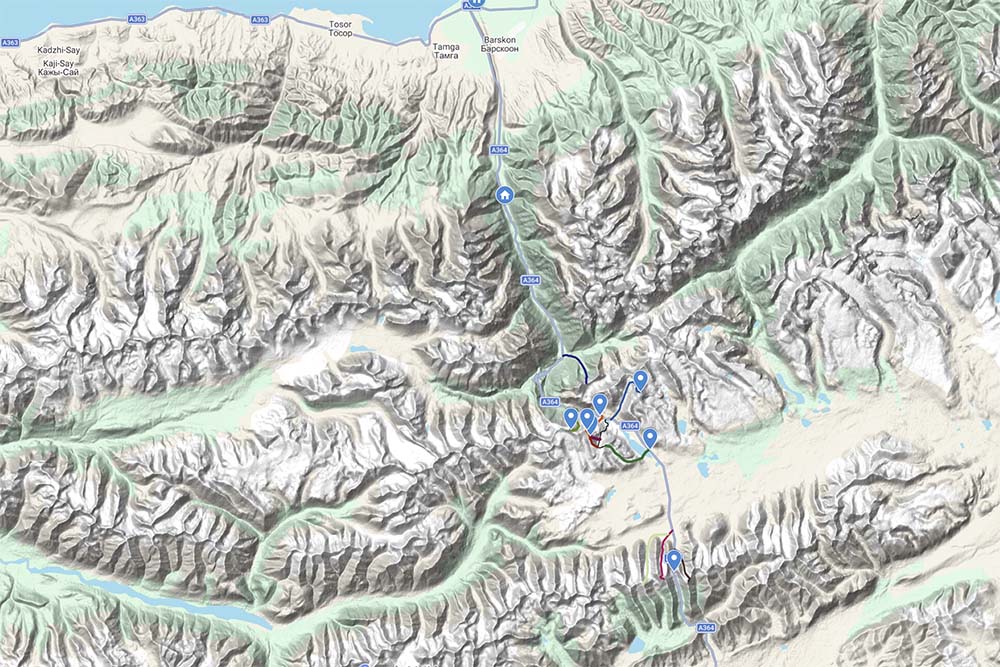
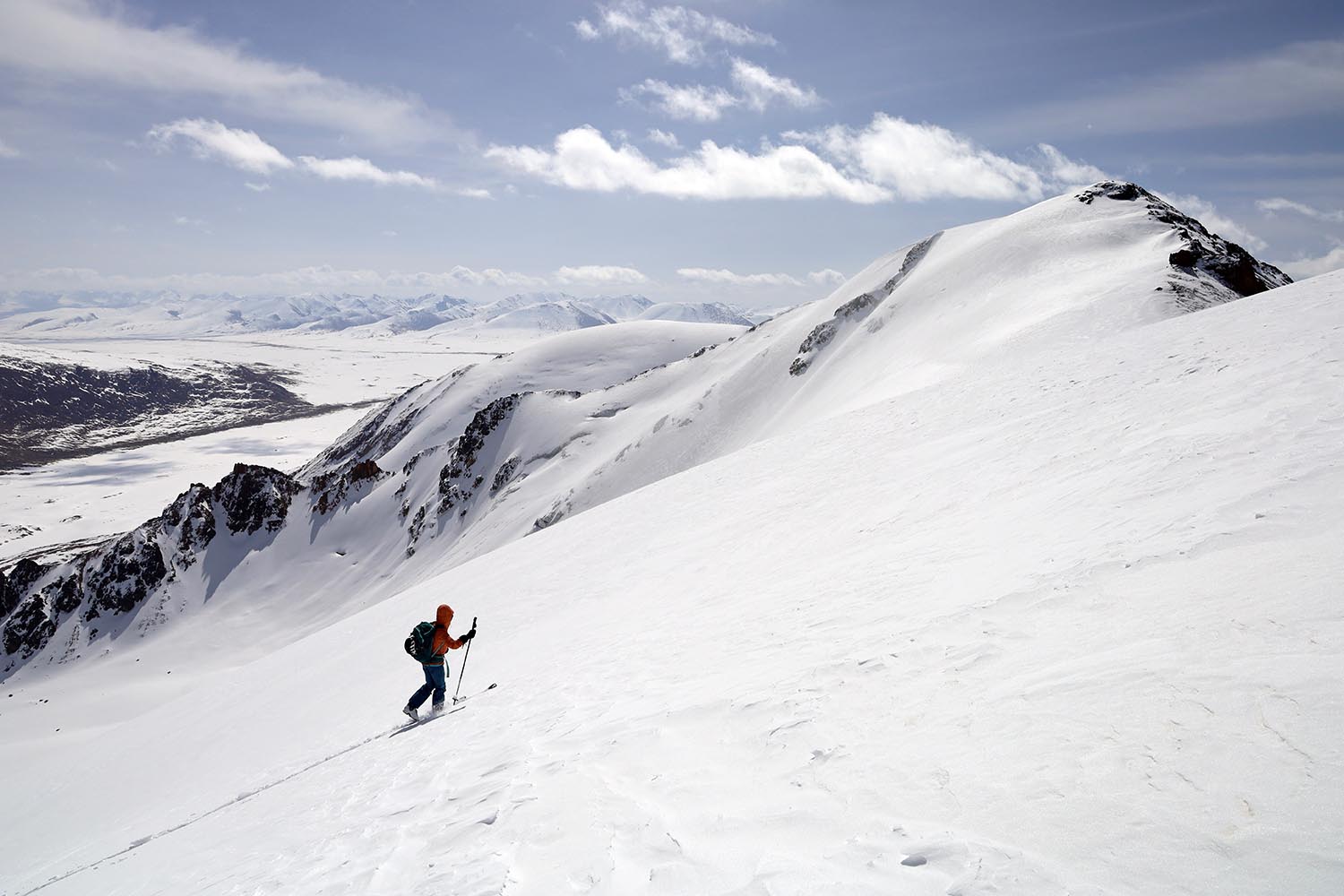
It is in this context that we chose to explore the area around the Arabel Pass, perched at over 3800 m, in the Tian Shan. This pass connects the Barskoon valley, on the shores of Issyk Kul, to vast high-altitude plateaus open towards China; a sector long isolated, now undergoing transformation. Around the pass, a titanic construction site is underway with the construction of a major road and a 4 km tunnel under the Seok Pass. The work is expected to last several years, but the track is already sufficiently advanced to allow access in the middle of winter.
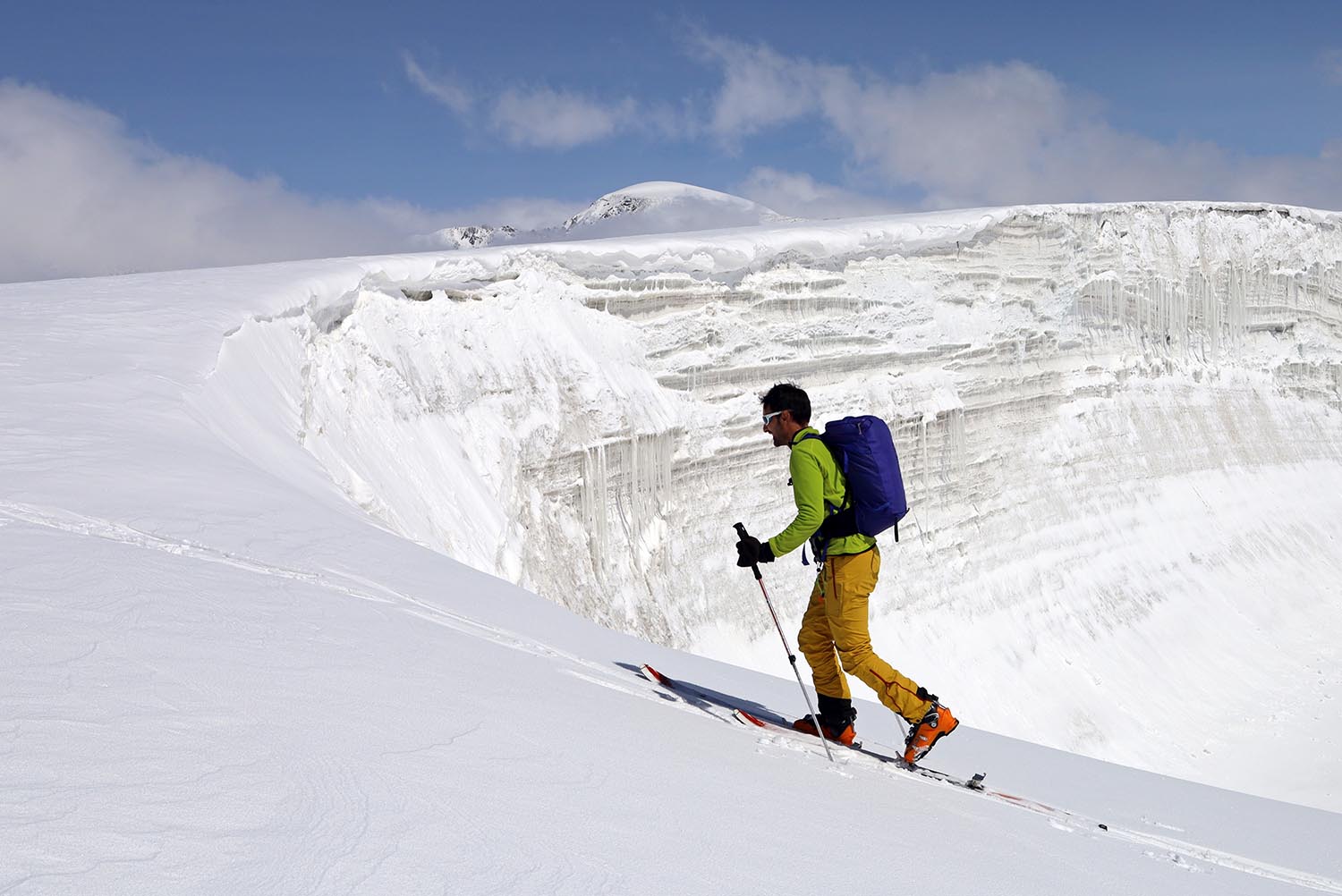
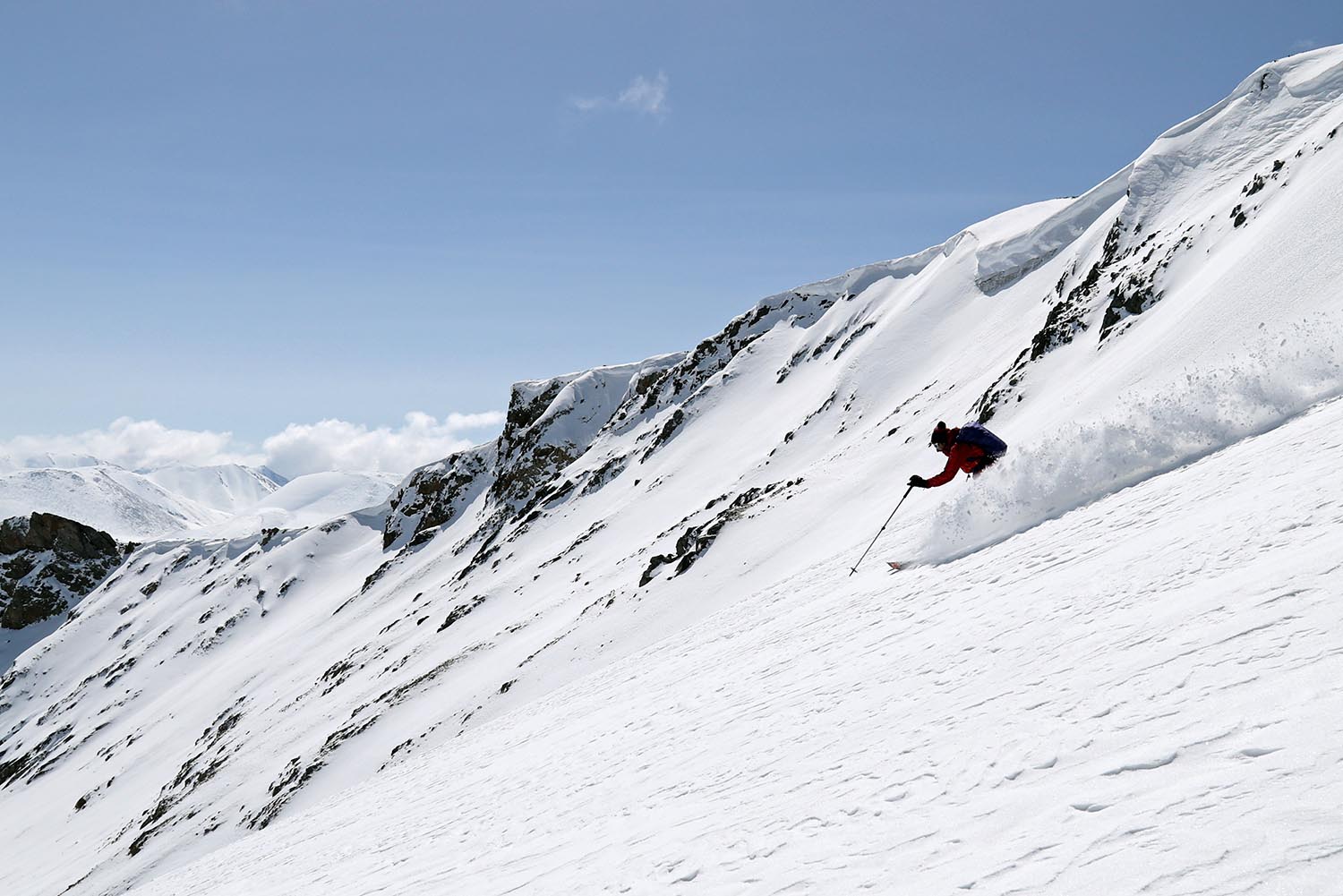
On paper, it’s hard to do better for ski touring. Dozens of peaks over 4000 m, glaciers as far as the eye can see, and often no or almost no approach from the road. An exceptional playground and still little frequented. There remains a more contrasted reality on the ground, if the scenery remains completely crazy, the ongoing works clearly damage the sector by endr
LOCATION
WEB SUPPLEMENT
PREVIEW OF THE SUPPLEMENT