


An avalanche transceiver should help you act quickly, without wasting time figuring out how it works. With the Focus Voice, Ortovox combines intuitive controls, voice guidance and ambitious search specifications. In the field, its ease of use impressed us most. Here is our verdict on this alternative to the Focus Pro, which already offers more than enough functionality for the vast majority of ski tourers.
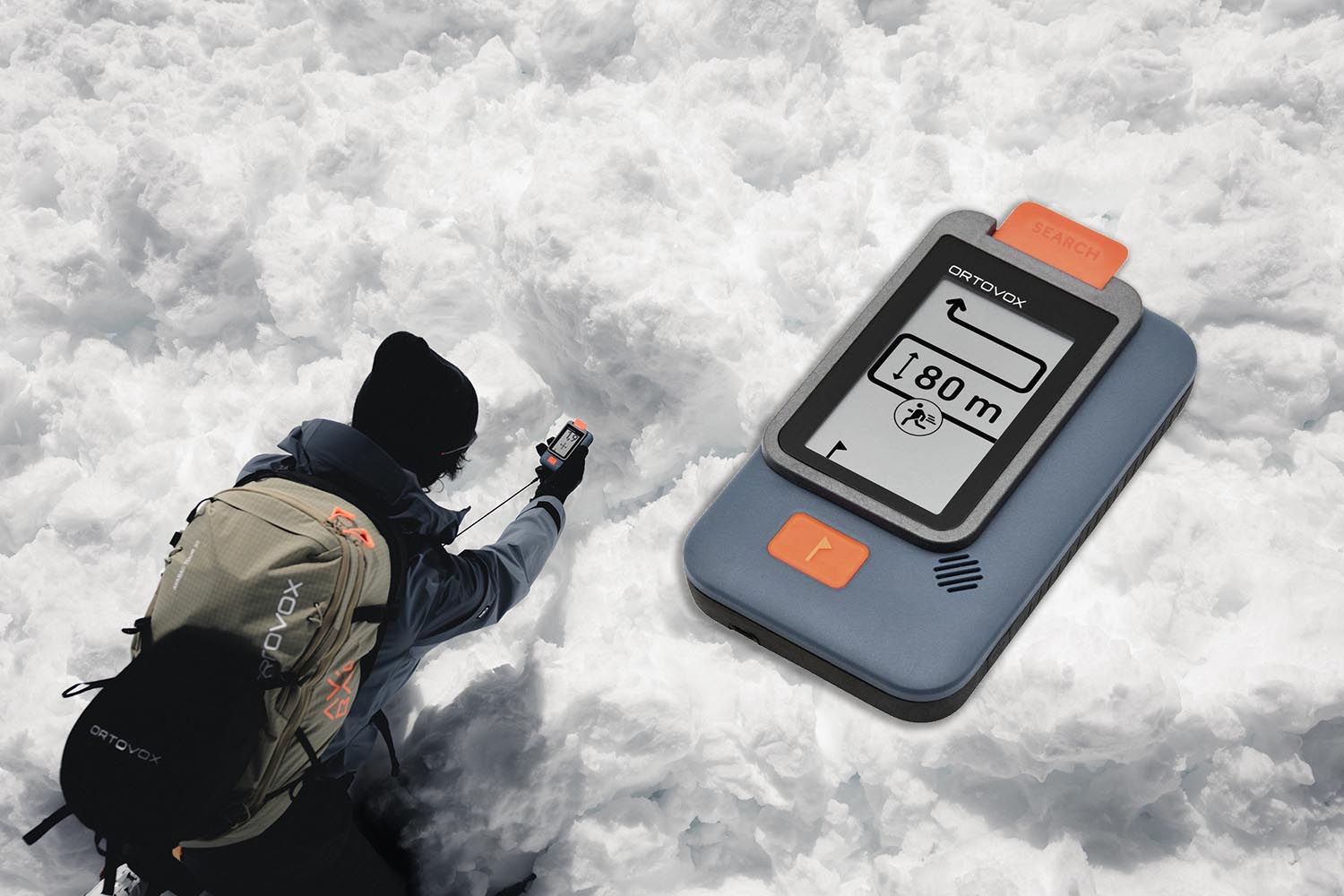
Ortovox Focus Voice: key specifications
| Type | Three-antenna digital avalanche transceiver with voice guidance |
| Claimed weight | 185 g |
| Claimed dimensions | 12 × 7 × 2.3 cm |
| Claimed search strip width | 80 m; 90 m when searching for an Ortovox transceiver equipped with Smart Antenna technology |
| Display | 2.7-inch Memory-in-Pixel display, 400 × 240 pixels |
| Power supply | Rechargeable lithium-ion battery with USB-C charging |
| Features | Flagging, group check, Smart Antenna, interference protection and automatic switch back to transmit in the event of a secondary avalanche |
| Connectivity | Bluetooth and Ortovox app |
| Recommended retail price | €380 |
Manufacturer specifications. Search strip width should not be confused with a guaranteed initial signal reception distance in every situation.
First impressions: immediately intuitive
Our main takeaway was clear from the outset: the Focus Voice is very easy to get to grips with. On first handling it, without reading the manual or receiving any instructions, we immediately identified the controls and worked out how to switch between transmit and search modes. There was no sense of having to decipher the device before using it.
That simplicity is particularly welcome in an avalanche transceiver. Spending a little time finding a setting on a GPS watch is one thing; expectations are different for a device designed for avalanche rescue. Here, the essential functions are readily accessible and the operating logic is clear.
An intuitive first encounter is no substitute for reading the manual and practising regularly. It does, however, show that Ortovox has put real thought into the controls: ease of use is more than a claim on the packaging.
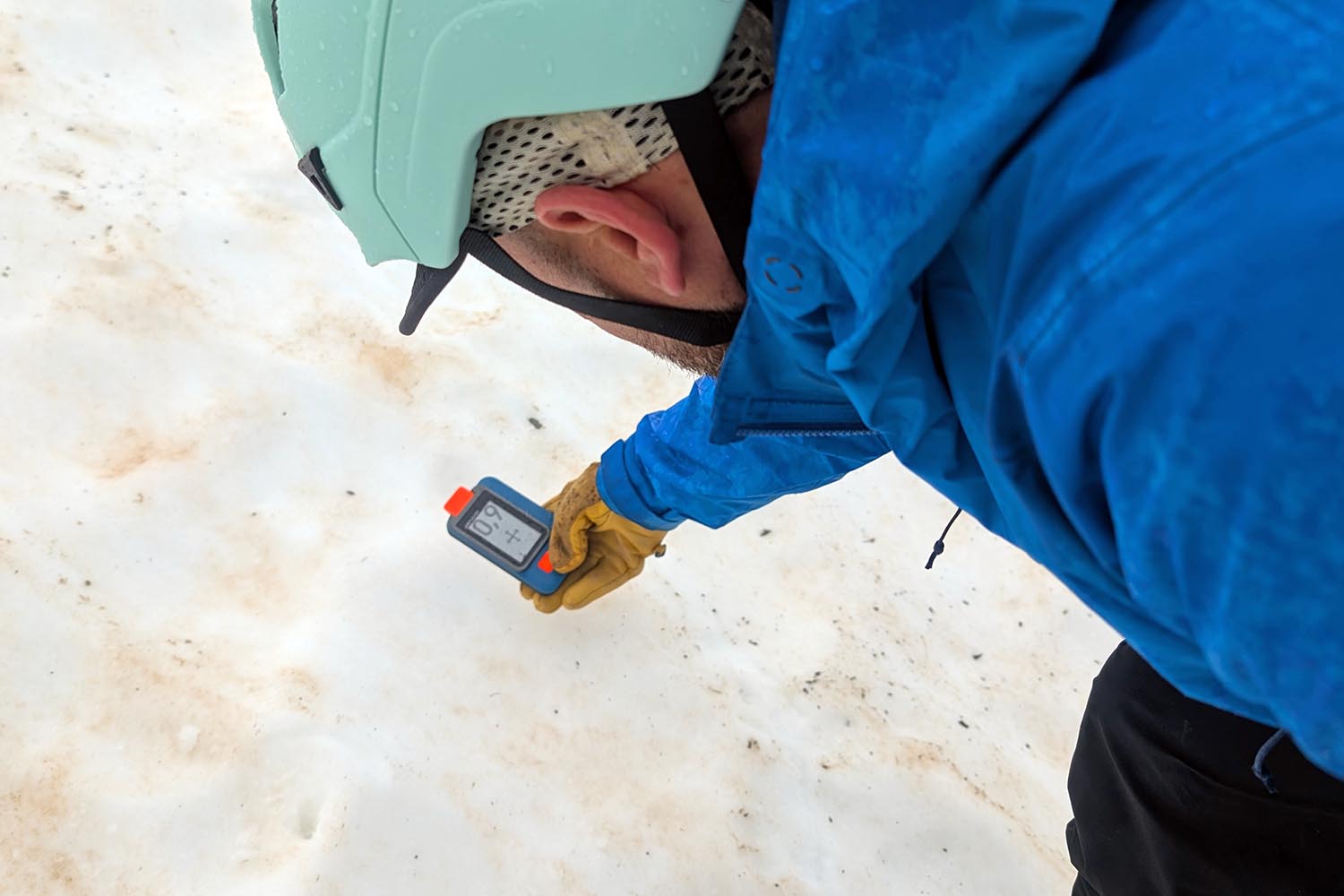
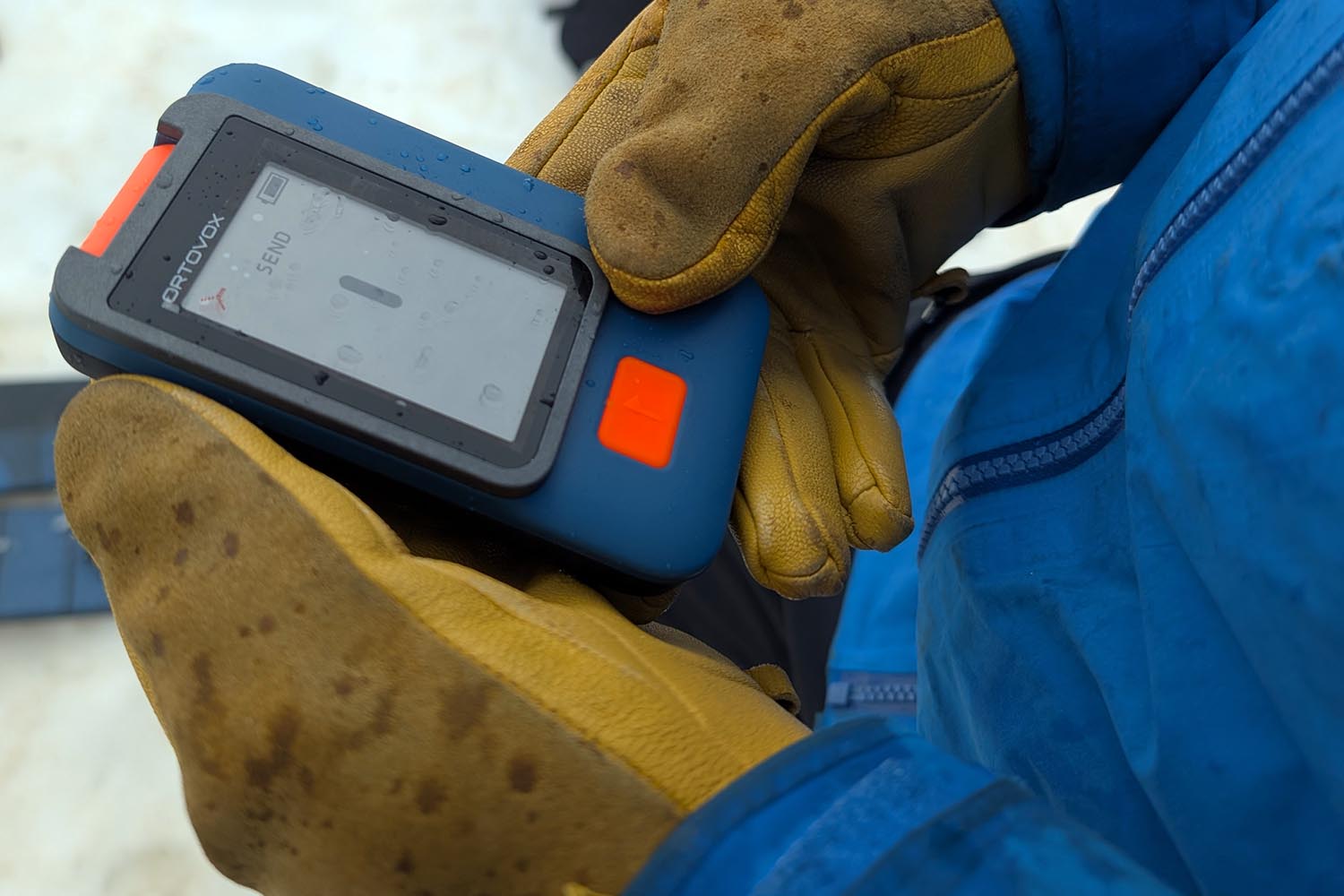
Transmit or search: switching between modes is one of the strengths of the Focus Voice’s design.
Switching to search: clear and straightforward
The mode switch was one of the features we appreciated most. Changing from transmit to search is clear and straightforward, without unnecessarily complicated handling. The sequence is easy to remember, making it easy to pick up the device regularly for practice sessions.
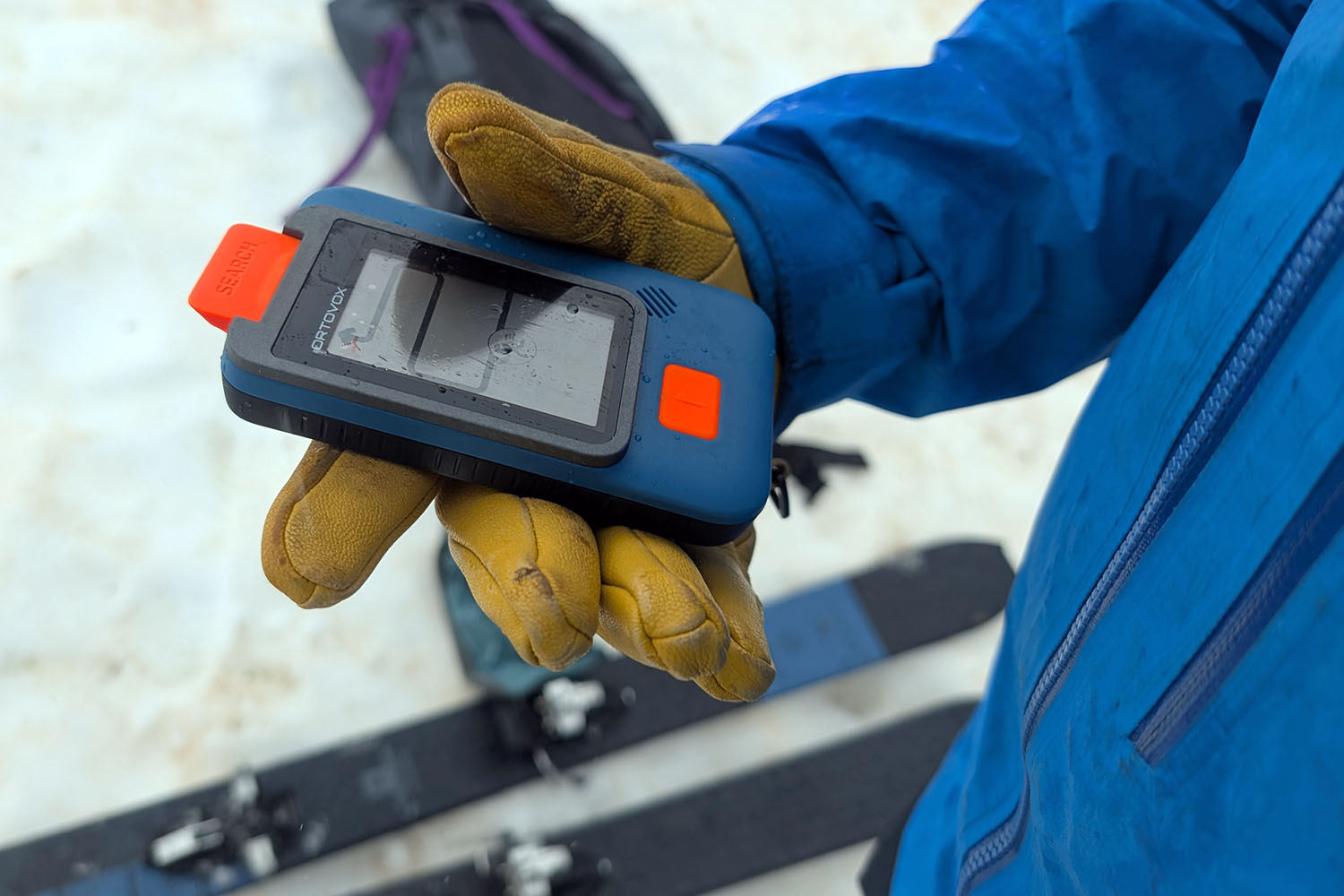
The clear interface contributes to that overall impression. The Focus Voice prioritises the information needed for the task at hand, with a large display occupying much of the front of the device. The design choice makes sense: Ortovox has retained a generous display rather than shrinking the housing as far as possible.
Voice guidance: another useful reference
Already featured on the Diract Voice, voice guidance accompanies the different search phases. It adds spoken instructions to the usual visual and audible cues, providing another reference to help the user organise their actions and continue the search.
This approach fits the Focus Voice’s overall philosophy: making the device easier to use without requiring familiarity with a long list of functions. For someone who goes ski touring regularly but only uses their transceiver in search mode during practice sessions, that assistance makes sense.
It is still important to keep its role in perspective: spoken instructions do not carry out the search for you. Technique and familiarity come from repeated practice in the field, until the different stages can be completed smoothly.

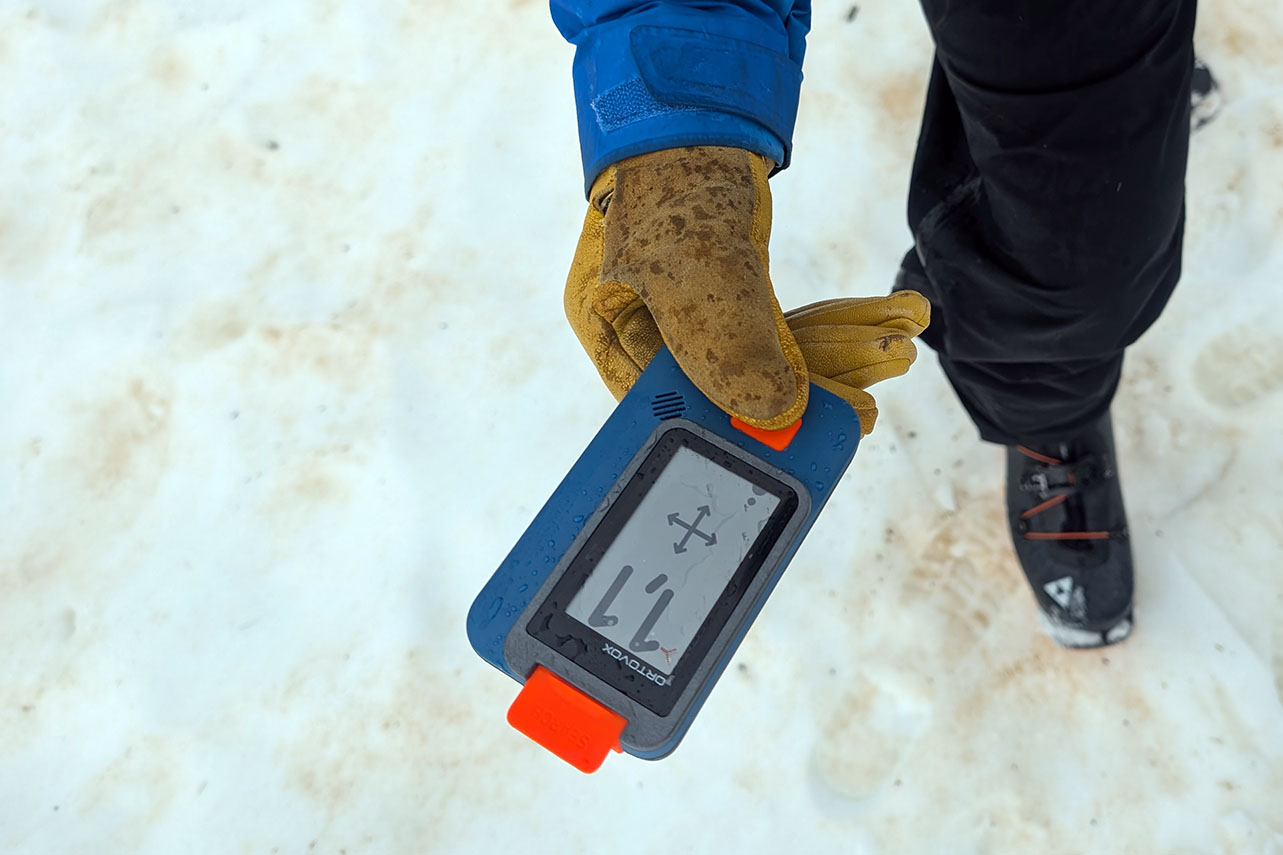
The Focus Voice display during different search phases.
Field performance: more than an entry-level feel
Its ease of use might suggest a device aimed solely at beginners. Our experience in the field was quite different: performance felt very respectable, in line with what we would expect from more advanced avalanche transceivers. Above all, the Focus Voice gave us the impression of combining an accessible interface with serious capability.
We did not conduct a timed comparison or systematic reception range measurements. This review therefore does not rank it against competing devices or confirm reception distances to the nearest metre. Our assessment concerns its handling in the field and how well the overall package works.
Ortovox quotes an 80-metre search strip width, increasing to 90 metres when searching for one of its transceivers equipped with Smart Antenna technology. These figures relate to coverage during the signal search phase; they should not be interpreted as guaranteed reception at those distances in every situation.

Smart Antenna and interference protection
The Focus Voice incorporates two technologies designed to improve its operation in less favourable conditions. Smart Antenna selects the transmitting antenna according to the device’s orientation. The aim is to make its signal easier for other transceivers to pick up.
Interference protection operates in both transmit and search modes. According to Ortovox, the device detects interference and adjusts its operation accordingly. In search mode, the search strip width can be reduced to 50 or 20 metres, with a voice prompt notifying the user.
These features add to the package, although our test does not allow us to quantify their individual benefits. They also do not replace the need to follow the recommended separation distances between the transceiver and sources of interference.
A rechargeable battery: a welcome practical feature
The rechargeable battery is one of the design choices we appreciate most. USB-C charging removes the recurring expense of buying good-quality disposable batteries, which adds up over several seasons. For a device used regularly, including during training sessions, that is a practical and financial benefit.
It simply changes the pre-tour routine: check the charge level and recharge in advance when needed. We did not run the battery down to measure its full operating time, so we are not quoting a tested battery life here.
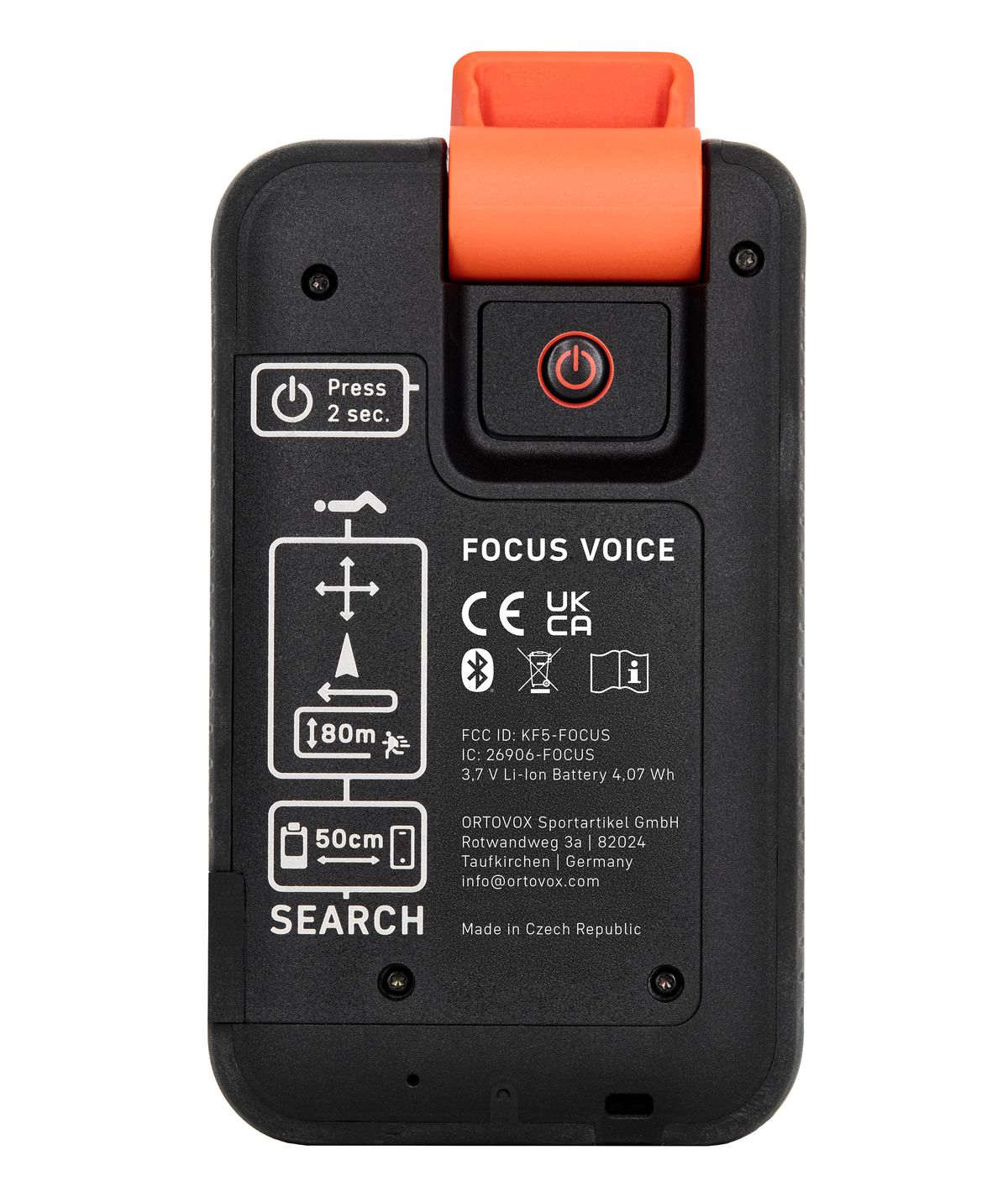
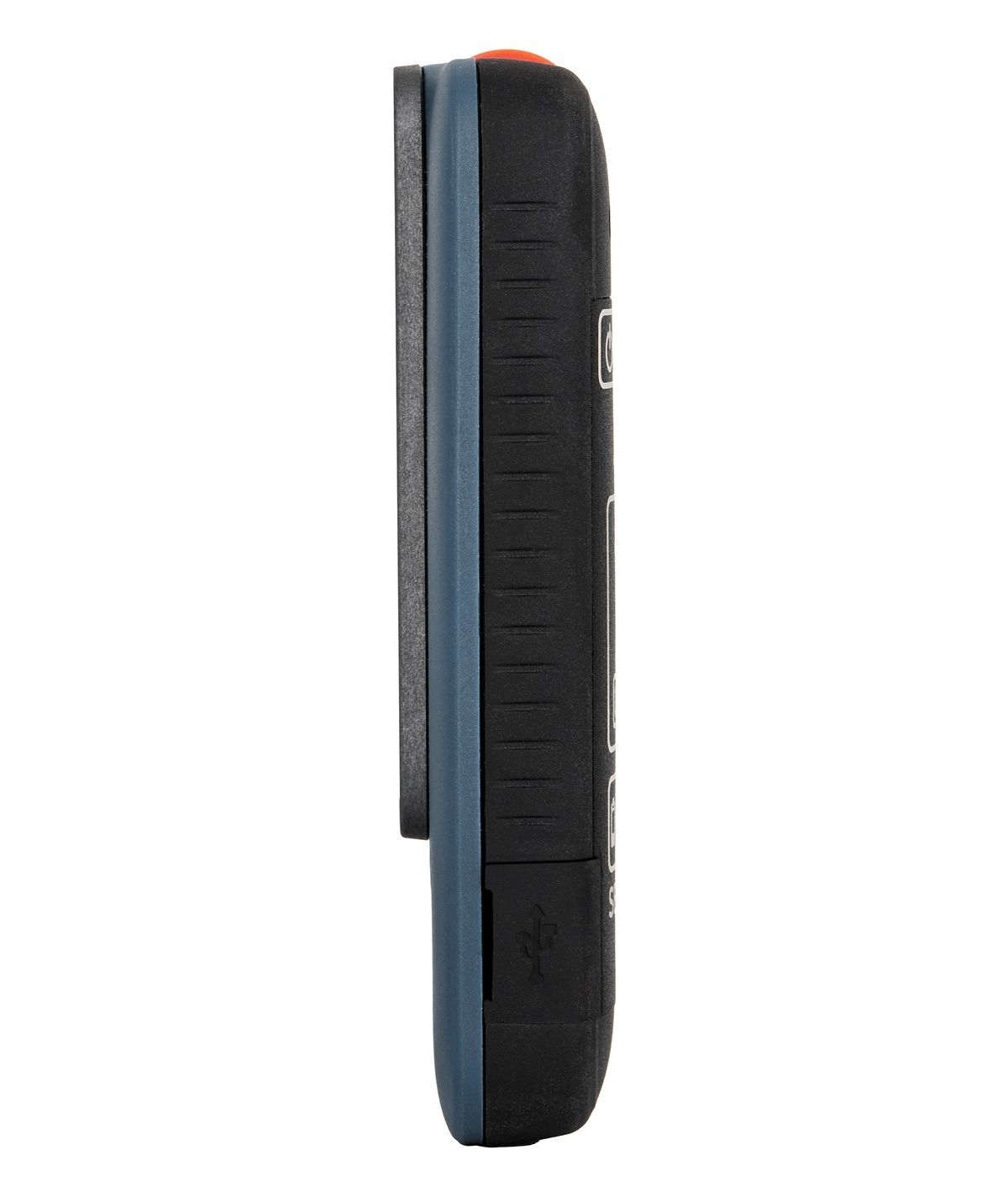
The Focus Voice uses a rechargeable battery with USB-C charging, avoiding recurring purchases of disposable batteries.
Reasonable dimensions, but room for improvement for pocket carry
This is our main reservation: we would have liked a slightly smaller housing. For those who prefer carrying their transceiver in a suitable pocket rather than the supplied holster, shaving off a few millimetres would make it easier to stow and less noticeable.
The Focus Voice is still reasonably sized. In our view, it sits between the bulkiest devices and the most compact options. Its dimensions are not a deal-breaker, but they are worth considering when choosing a transceiver, particularly if pocket carry is a priority.
Ideally, check how it fits with your own ski touring trousers, while following the manufacturer’s carrying instructions. A pocket that physically accommodates the device is not necessarily suitable for carrying an avalanche transceiver.
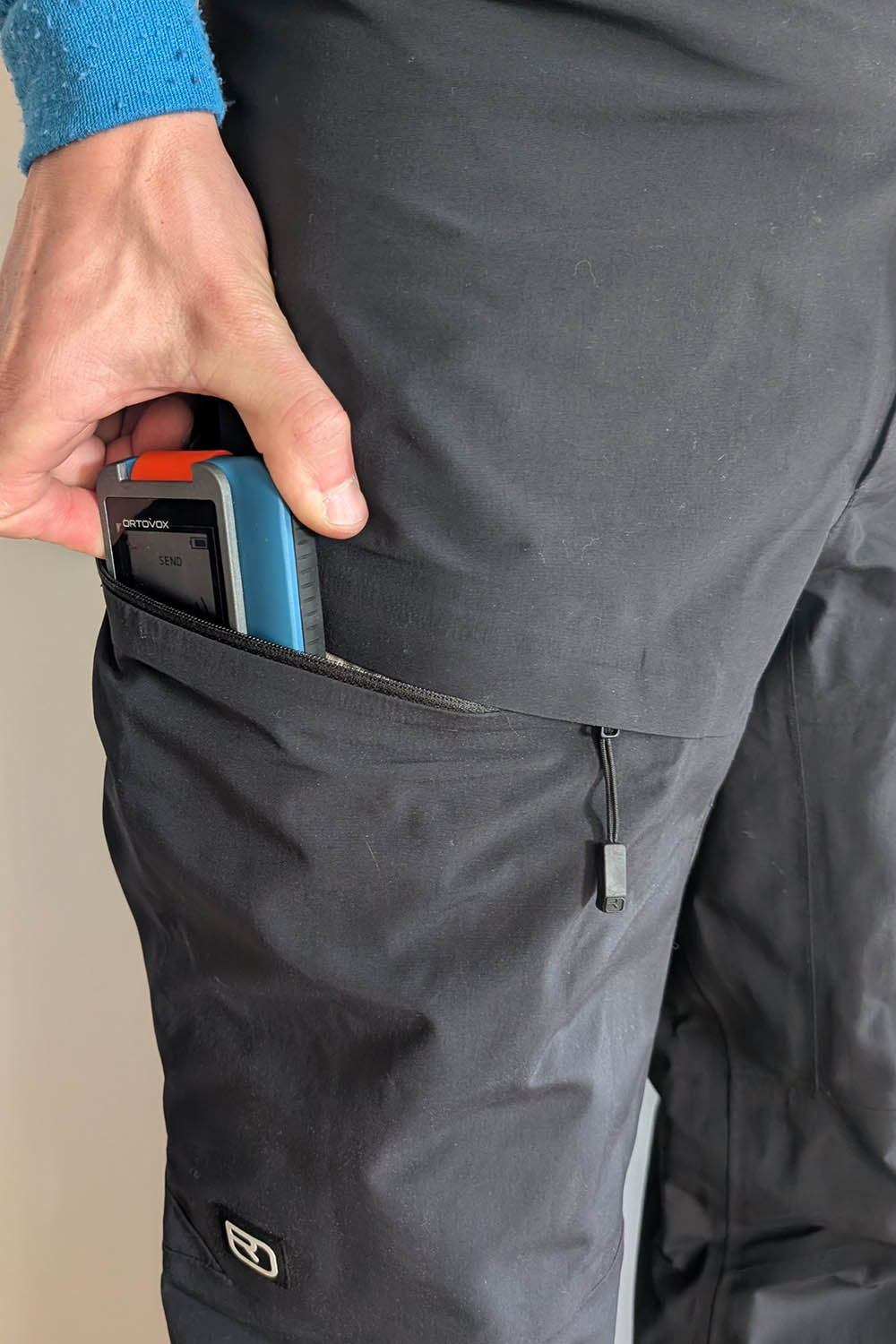
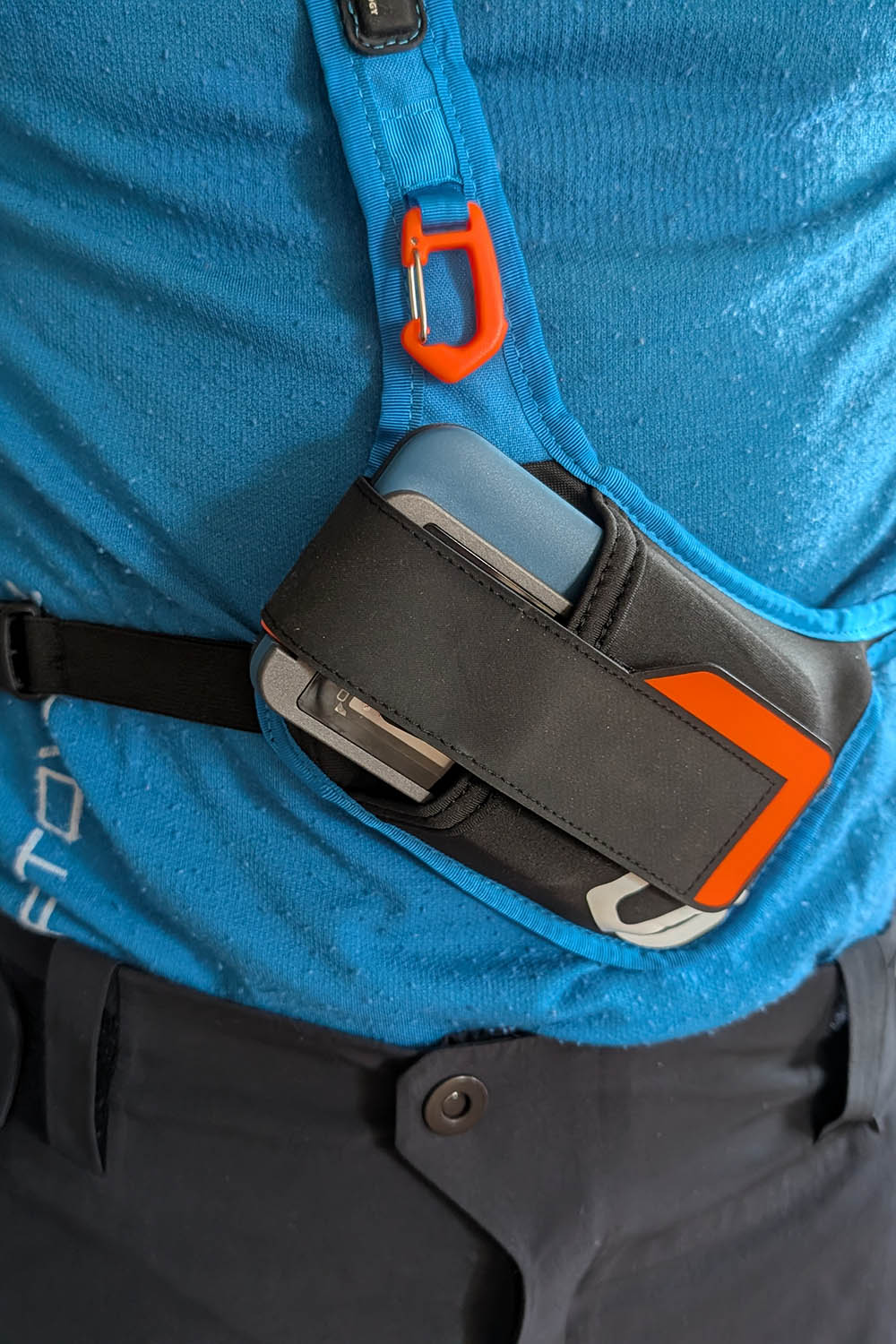
A middle-ground size: manageable in its carrying system, but a little more noticeable in a pocket.
Focus Voice or Focus Pro: which should you choose?
The Focus Pro builds on the Voice’s core features with additional tools for complex searches, including more advanced signal selection, manual search strip width settings and analogue audio. These options are relevant to professionals and users specifically trained in those search techniques.
For the vast majority of ski tourers, the Focus Voice we tested already offers more than enough functionality. We did not feel the need for additional features during normal use. Its appeal lies in remaining accessible without feeling limited.
Choosing the Pro should therefore answer a specific need, rather than the assumption that a more complex device is automatically the better choice. For many users, knowing their own transceiver thoroughly and practising regularly will remain the priority.
Our verdict on the Ortovox Focus Voice
The Focus Voice impressed us with its well-considered design. It is quick to get to grips with, switching between transmit and search is very clear, and the performance we experienced in the field was reassuring. It keeps the essential functions readily accessible, with ease of use its strongest selling point in our view.
The rechargeable battery adds a practical everyday benefit by removing the need to buy disposable batteries. Our main reservation concerns its dimensions: a slightly smaller housing would have been welcome for pocket carry.
For ski tourers looking for a well-equipped avalanche transceiver that is straightforward to handle and easy to practise with, the Focus Voice deserves a place on the shortlist. The Pro version caters for more specialised needs; this version already feels well suited to the majority of backcountry outings.
Our key takeaways
What we liked
- Immediately intuitive handling.
- A clear, straightforward switch between transmit and search.
- Very respectable performance in the field.
- Practical USB-C charging that avoids recurring battery purchases.
- More than enough functionality for most ski tourers.
What could be improved
- A slightly smaller housing would make pocket carry easier.
Explore the Focus Voice on the Ortovox website →
This review combines our field impressions with specifications supplied by Ortovox. Search strip widths, weight and dimensions are manufacturer figures. An intuitive avalanche transceiver does not replace reading the manual or regularly practising transceiver searches, probing and shovelling.